


Renovating a bathroom within a manufactured home presents a distinct set of challenges that differs significantly from updating a standard site-built residence. Homeowners often discover that standard fixtures available at big-box hardware stores simply do not align with the specific dimensions, plumbing configurations, or structural weight limits found in their mobile homes.
Upgrading the bathtub area remains one of the most high-impact ways to increase property value and enhance daily living comfort, yet it requires specific industry knowledge to execute correctly. Navigating the market for the right materials demands a clear understanding of structural limitations and moisture control to ensure a long-lasting result. We’ve created the ultimate buyer’s guide to mobile home tub surrounds to help you stay on the right track.
Understand Mobile Home Bathroom Dimensions
Standard residential bathtubs typically measure 60 inches in length, but manufactured homes frequently use smaller, specialized dimensions to accommodate narrower hallway widths and floor plans. A failure to measure the alcove correctly constitutes the most common error during these renovation projects. Most mobile home tubs measure 54 inches by 27 inches, a size rarely stocked by general home improvement retailers.
Accurate measurement requires measuring from the studs rather than the existing wall surface, as drywall or paneling thickness can skew the numbers. Owners must also measure the drain location with precision, as mobile homes often use center drains or offset drains that do not match standard residential plumbing layouts. Ignoring these unique dimensional constraints will lead to purchasing a surround that requires extensive and costly modification to the home’s framing.
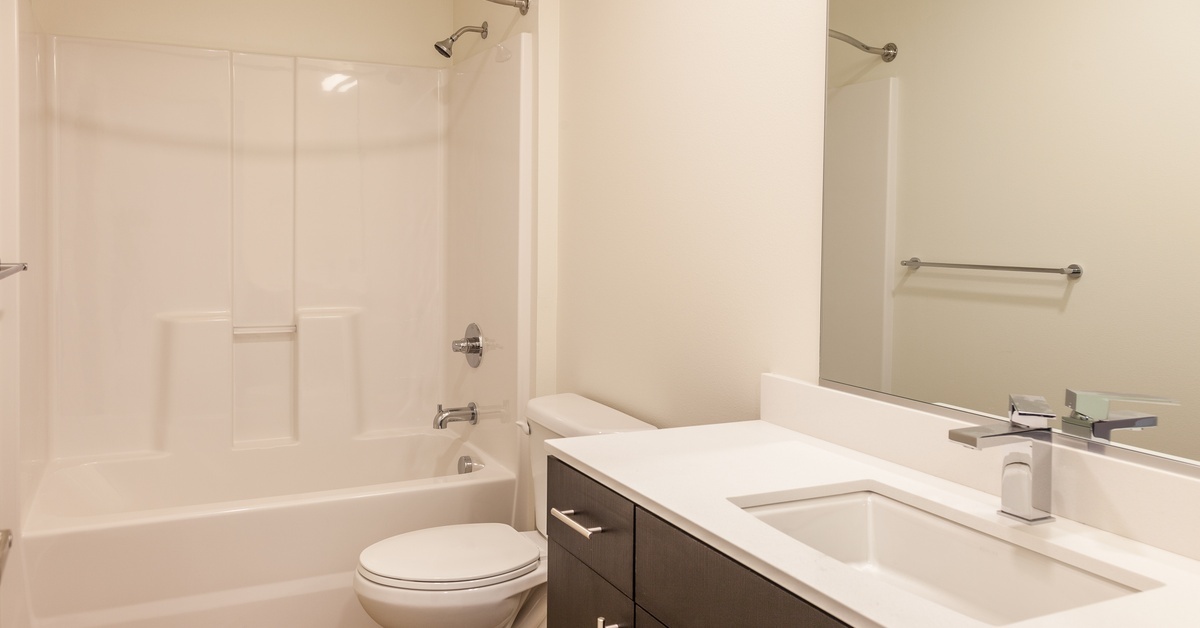
Select Materials That Last in Manufactured Homes
Weight plays an important role in selecting materials for a mobile home, as the subfloor and joist system may have lower load-bearing capacities than a traditional home. Manufacturers specifically design products using lightweight yet durable materials like fiberglass-reinforced plastic or high-grade acrylic to address this structural reality.
- ABS Plastic: This material offers a cost-effective solution that resists impact and retains heat well, making it a popular choice for budget-conscious renovations.
- Polystyrene: While affordable, this material is often thinner and may require more careful cleaning to prevent scratching over time.
- Fiberglass: Providing superior strength and a solid feel, fiberglass commands a higher price point but offers excellent longevity and resistance to cracking.
- Acrylic: Known for its high-gloss finish and resistance to mold, acrylic surrounds provide a premium look that mimics the aesthetic of ceramic tile without the weight.
Choosing the correct material ensures that the renovation adds aesthetic value without compromising the structural integrity of the bathroom floor.
Address Installation Challenges Specific to Mobile Homes
Wall construction in manufactured homes often uses thinner studs or different spacing intervals compared to the 16-inch-on-center standard found in site-built houses. Installers must locate the framing members accurately to make sure the surround has adequate support and creates a rigid surface that will not flex when leaned upon.
Creating a solid backing is essential, particularly if the walls are out of square, which occurs frequently in older mobile homes due to settling. A successful project might require furring out the walls or adding additional blocking between studs to provide a secure mounting surface for the new panels. Addressing these framing irregularities before applying adhesive prevents the new mobile home tub surround from popping loose or developing gaps later.
Budget Accurately for Your Renovation Project
Establishing a realistic budget requires looking beyond the sticker price of the tub surround kit itself. A comprehensive budget must account for demolition costs, disposal fees for the old unit, and the inevitable plumbing upgrades that accompany a surround replacement.
Plumbing fixtures in older mobile homes often use proprietary connections that may not interface with modern faucets, necessitating a full valve replacement. Subfloor repairs frequently become necessary after removing the old tub, as years of minor leaks often compromise the particle board flooring commonly used in manufactured housing. Allocating a contingency fund of roughly 20 percent ensures that these hidden structural surprises do not halt the project midway through completion.
Maintain Surrounds for Long-Term Performance
Preserving the glossy finish and structural integrity of a new surround requires adhering to specific cleaning protocols designed for synthetic materials. Abrasive scouring pads and harsh chemical cleaners strip the protective coating from acrylic and fiberglass, leaving the surface porous and susceptible to staining.
Evaluate Professional Versus DIY Installation
Replacing a tub surround falls within the capabilities of a skilled DIY enthusiast, but it requires a broad skill set involving plumbing, carpentry, and precise measuring. The demolition phase can prove physically demanding and risks damaging adjacent walls or plumbing lines if executed without care.
Hiring a professional who specializes in mobile home repair ensures that the installer understands the nuances of the specialized plumbing and framing systems. Professionals carry the necessary tools to handle unexpected structural issues and can typically complete the job in a fraction of the time required for a first-time DIY attempt. Homeowners must weigh the cost savings of labor against the risk of improper installation and potential water damage liability.
Source Components From Specialized Retailers
General home improvement stores rarely dedicate shelf space to the specific 54 inch tubs and specialized plumbing fittings required for manufactured homes. Sourcing parts from a dedicated mobile home supply retailer ensures compatibility and access to expert advice regarding the unique quirks of these structures.
Specialized retailers stock the correct bottom-support pads, drain assemblies, and wall anchors designed specifically for manufactured housing applications. Using the correct components prevents the frustration of attempting to force residential parts to fit where they do not belong. Securing materials from a knowledgeable supplier guarantees that the warranty remains valid and the installation meets the specific safety codes governing manufactured homes.
Elevate Your Home’s Value and Comfort
Investing in the correct tub surround transforms a dated, utilitarian bathroom into a rejuvenating sanctuary while safeguarding the home’s structure against moisture damage. A successful renovation relies on respecting the unique architectural requirements of manufactured housing rather than fighting against them. Prioritizing quality materials, precise installation techniques, and specialized components ensures that the new bath space serves the household reliably for years to come.
Mobile Home Outfitters is proud to provide you with this buyer’s guide to mobile home tub surrounds. If you feel unclear about yours or would like to learn more, don’t hesitate to reach out to our team.